Unmasking Overtourism
The Venice Dilema
Google’s top search results for Venice are ‘Venice is too busy’ , ‘Venice is too touristy’ and ‘Venice is too crowded’. These statements are usually accompanied by pictures like the one below and a sense of dread when thinking about future visits to such places.
But did you know there is actually a term for this situation? It’s called overtourism. By definition, overtourism occurs when a location experiences an excessive number of tourists, surpassing its capacity to manage and sustain a quality experience for both visitors and locals. This is nowhere more evident than in Venice. Post-COVID visitor numbers have exploded and the government has tried to implement several management strategies with varying degrees of success.
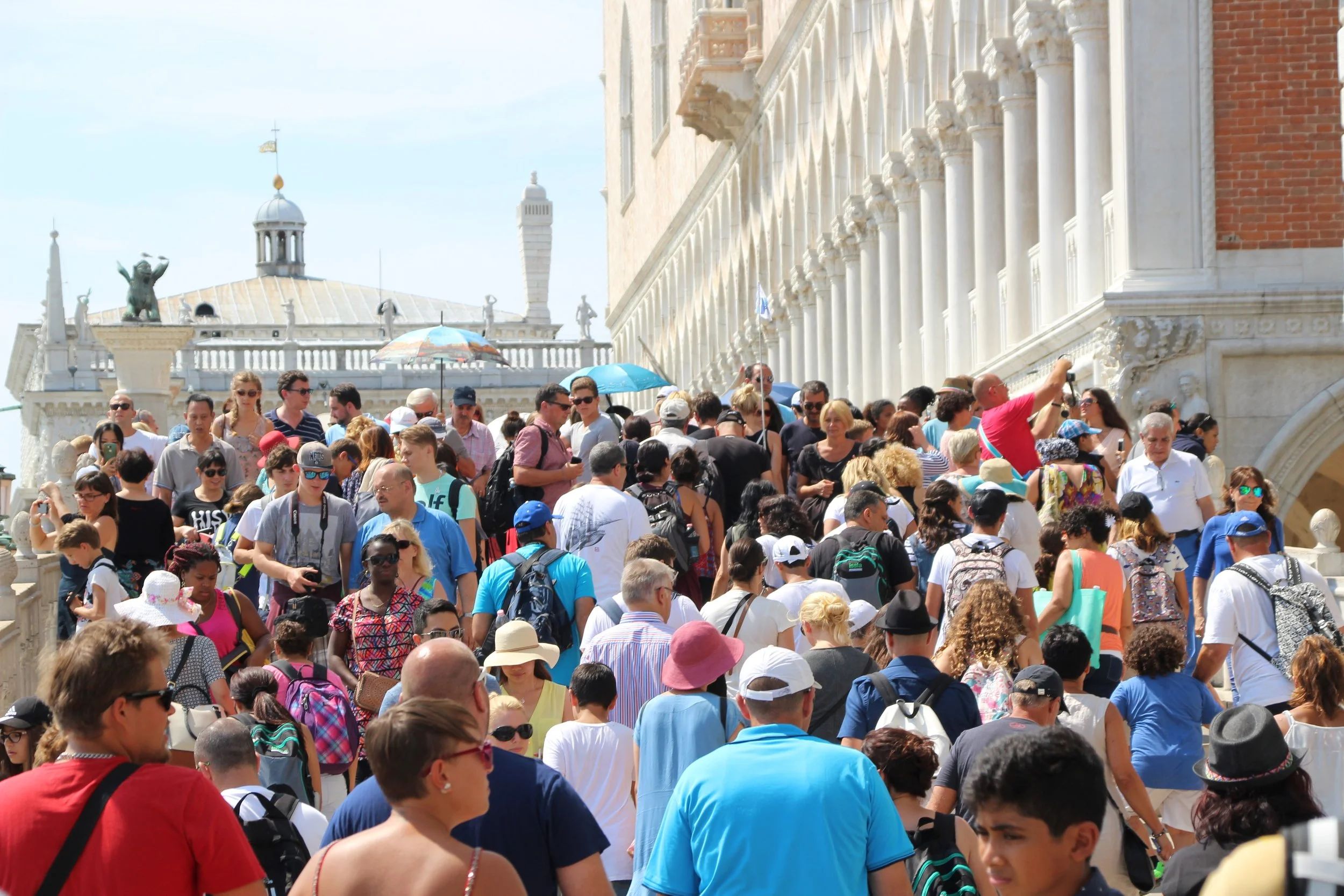
Massive crowds have become a common sight in Venice
Just under 4 million people visited Venice in 2022 with this number set to grow significantly in 2024. The consequences of this number of people in a tiny location like Venice are becoming more and more evident with each season.
The city's unique architecture is suffering wear and tear caused by the sheer volume of foot traffic. There aren’t enough restaurants or dining services to manage large groups. Locals have been displaced to the mainland as most houses on the island are now owned by foreign investors, hotel chains or are rented out as Air BnB’s. Authentic storefronts have been replaced with stores that sell cheap imported souvenirs. And the lagoon that was famously clear and visited by dolphins during lockdown is now hazy and suffering from tourist litter once again.
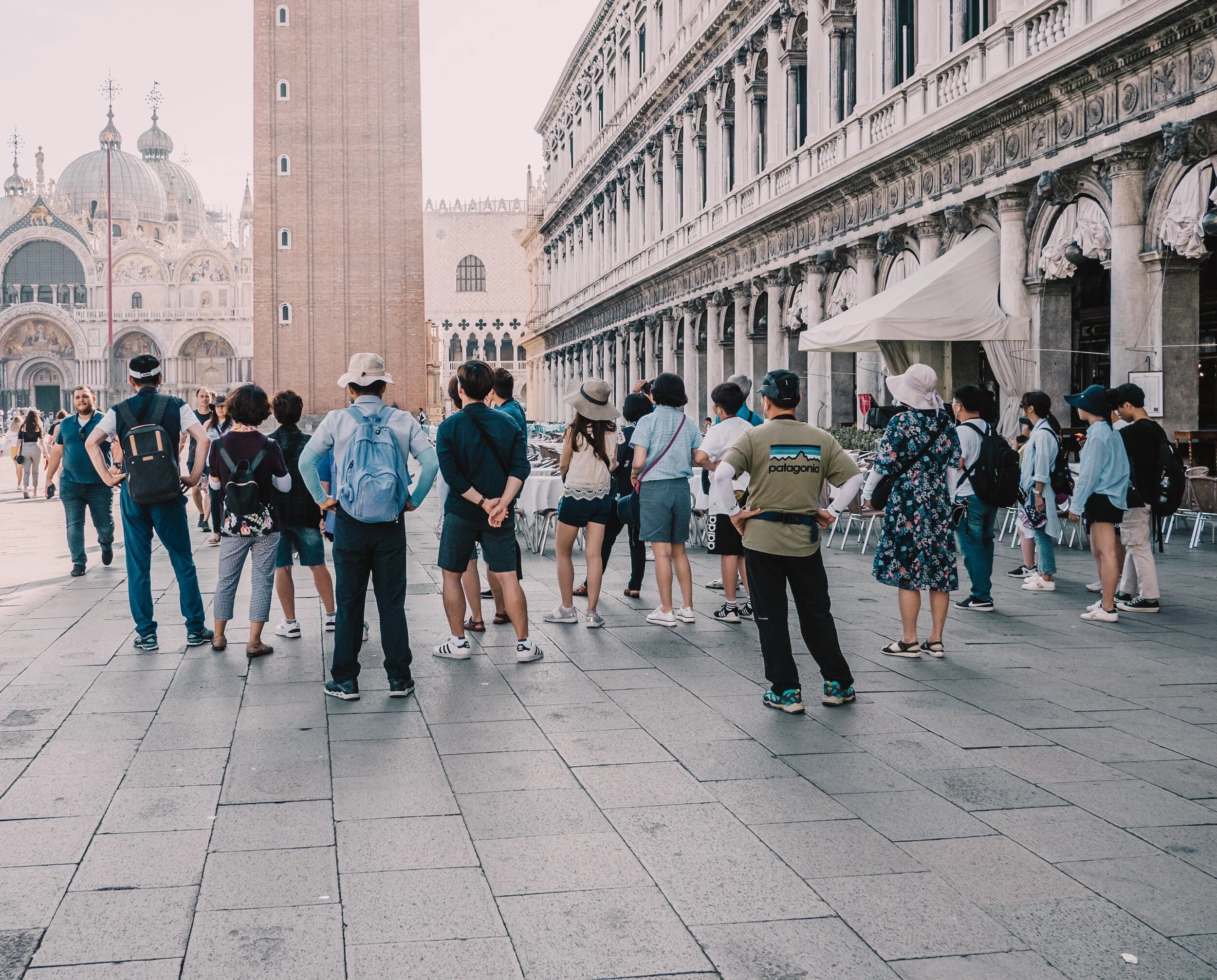
A tour group takes in the sights of St Mark’s Square
Efforts to address overtourism in Venice have included implementing visitor caps, promoting responsible tourism practices, and investing in sustainable infrastructure. These measures aim to strike a balance between preserving the city's cultural heritage and ensuring a positive experience visitors, but in reality success has been difficult to track.
Take the tourist tax for example - it’s 1 to 5 euro per person per night. If visitors are already paying thousands in hotel and airfare costs, an amount this small is hardly going to deter or encourage them to reconsider their travels.
Likewise - it was sensationally announced in 2022 that cruise ships would be banned in the lagoon; to the excitement of many locals. What actually happened though that ships were allowed to dock outside of the lagoon and transfer their guests by smaller tender boat or bus.
This month’s decision to ban tour groups of more than 25 people is likely to go down in a similar fashion unless real limitations are imposed. We foresee large tour groups simply breaking in half and visiting the island independently - therefore not reducing the foot traffic but instead spreading it out. While this could be deemed as a small win, there is much more to be done.
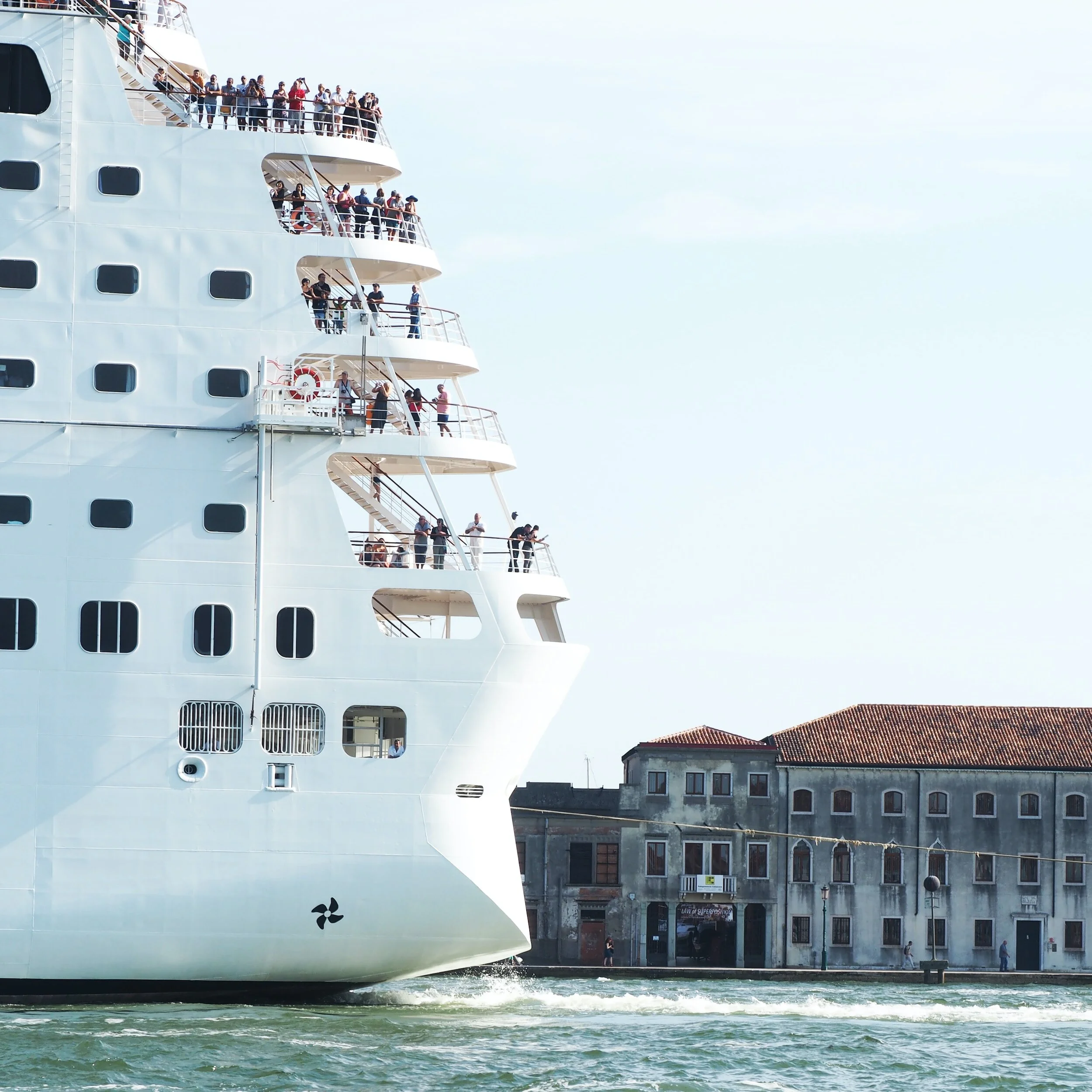
A cruise ship enters Venice’s lagoon
Venice serves as a poignant reminder that government, the tourism industry and individual travellers must work together to protect the world's most cherished destinations. However, it is up to us as responsible travellers to make the decision on where to travel and how. If you must go to Venice - stay somewhere locally owned over a chain hotel. Investigate booking local experiences like cooking classes over large group tours. Look at moving your trip into the shoulder seasons to avoid crowds.
Together, we can help preserve the beauty and authenticity of places like Venice for generations to come.